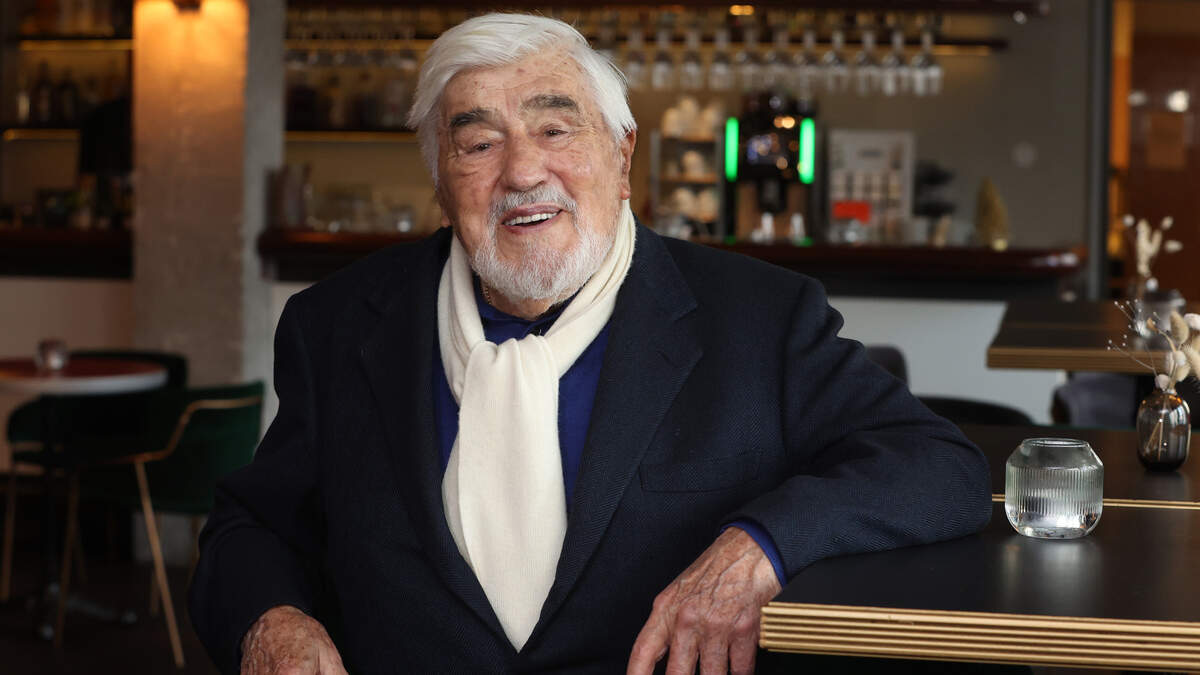
If you've ever found yourself pondering the exact date when one of Germany's most beloved and iconic actors, Mario Adorf, first graced the world, you're not alone. The question "Wann wurde Mario Adorf geboren?" (When was Mario Adorf born?) leads us to a specific day in history that marked the beginning of an extraordinary life and a monumental career in film, television, and theatre.
Mario Adorf was born on Monday, September 8, 1930. This date isn't just a simple entry in a calendar; it signifies the genesis of a cultural phenomenon, a man whose powerful presence, distinctive voice, and incredible versatility have left an indelible mark on German and international cinema for over six decades. His birth on this day predates many of the defining moments of the 20th century, allowing him to live through, witness, and dramatically interpret a vast spectrum of human experience on screen.
Mario Adorf's Birthdate: A Glimpse into a Virgo's Persona
Born on September 8, 1930, Mario Adorf's zodiac sign is Virgo, which spans from August 24th to September 23rd. Individuals born under the sign of Virgo are often characterized by their meticulous nature, analytical minds, strong work ethic, and practical approach to life. These traits seem to align remarkably well with Adorf's renowned dedication to his craft and the thoughtful intensity he brought to his roles.
Virgos are known for their attention to detail and a desire for perfection, qualities that undoubtedly contributed to Adorf's ability to inhabit such a diverse array of characters, from the menacing villain to the deeply complex protagonist. His career is a testament to persistent effort and a methodical pursuit of excellence, often associated with the Virgo personality. Understanding "Wann wurde Mario Adorf geboren?" therefore offers a small astrological insight into the enduring characteristics that have defined his stellar professional journey.
The Humble Beginnings of a Future Star
Mario Adorf's early life was far from the glamour of Hollywood. He was born the son of a German X-ray assistant and an Italian surgeon, a bicultural heritage that perhaps contributed to his later versatility and international appeal. His formative years were spent with his mother in the picturesque Eifel region of Germany and, for a period, in a Catholic children's home. These experiences undoubtedly shaped his worldview and resilience, possibly fueling the depth and authenticity he would later bring to his performances.
Before his pivot to acting, Adorf pursued an intellectual path, studying Philosophy and Literature at the University of Mainz, and later continuing his studies in Zurich. This academic background suggests a curious mind and an early engagement with complex narratives, which would serve him well in his artistic endeavors. However, the allure of the stage proved too strong. It was in Zurich that he began assisting with stage direction, a path that eventually led him to abandon his studies and enroll in the prestigious Otto-Falckenberg-Schule for acting in Munich. This decision marked the true beginning of his vocational journey, setting the stage for one of Germany's most illustrious careers.
For more detailed insights into the initial phases of his career and other biographical elements, you might find Wann Wurde Mario Adorf Geboren - Article 1 particularly informative.
A Prolific Career: Master of Many Faces
The answer to "Wann wurde Mario Adorf geboren?" is just the starting point of understanding a career that has spanned over 60 years and encompasses more than 120 films. His early professional breakthrough came with a seven-year engagement as an ensemble member of the Münchner Kammerspiele, a prestigious theatre company. Simultaneously, he began to make his mark in cinema, with early roles in the "08/15" film trilogy and the beloved Western "Winnetou 1. Teil."
Adorf's ability to seamlessly transition between intense dramatic roles and lighter, more comedic parts cemented his status as an actor of immense range. He has portrayed everything from menacing villains to charismatic figures, always imbuing his characters with a unique gravitas and an unmistakable screen presence. Some of his most celebrated roles include:
- "Die verlorene Ehre der Katharina Blum" (The Lost Honor of Katharina Blum): A powerful adaptation of Heinrich Böll's novel, where Adorf delivered a critically acclaimed performance.
- "Die Blechtrommel" (The Tin Drum): An iconic role in the Oscar-winning film that brought him international recognition.
- "Der große Bellheim" (The Great Bellheim): A highly popular television miniseries that showcased his enduring appeal to a broad audience.
- "Rossini": A more recent success that highlighted his continued relevance and comedic timing well into his later years.
Even at 88 years old, Adorf continued to grace the screen, featuring in productions like "Winnetou - Der Mythos lebt" and "Karl Marx - der deutsche Prophet," demonstrating an unparalleled passion and commitment to his profession. His remarkable longevity and consistent quality are testaments to his profound talent and adaptability in an ever-evolving industry.
Beyond Acting: Author, Singer, and Cultural Icon
While Mario Adorf is primarily celebrated for his acting prowess, his artistic talents extend far beyond the silver screen. He has also distinguished himself as an author, enchanting readers with his amusing stories that often reflect his witty observations on life and people. Furthermore, Adorf has showcased his vocal talents as a performing singer, adding another dimension to his charismatic stage presence. His voice, instantly recognizable from his acting, also lent itself to various voice-acting roles, further demonstrating his versatility.
Throughout his illustrious career, Adorf has been honored with a multitude of prestigious awards, solidifying his status as a national treasure. These accolades include, but are not limited to, the Adolf-Grimme-Preis, the Bambi, the Goldene Kamera, and numerous German Film Awards. In 2010, his lifetime of contributions to the arts was recognized with an honorary doctorate, a fitting tribute to his monumental impact.
In 2019, Adorf embarked on his "Zugabe" (Encore) tour, a heartfelt farewell to the stage where he captivated audiences by sharing stories, chansons, and reflections on the incredible roles that defined his career. This tour was a poignant celebration of a life dedicated to artistry, allowing his fans one last opportunity to experience his magic live. To delve deeper into the breadth of his awards and later career milestones, you may wish to read Wann Wurde Mario Adorf Geboren - Article 3.
Personal Life and Enduring Legacy
Since the 1960s, Mario Adorf has primarily resided in Italy, a choice that reflects his deep connection to his paternal heritage and the Mediterranean lifestyle. He is married for the second time, and from his first marriage to actress Lis Verhoeven, he has a daughter, Stella Adorf, who has also followed in her father's footsteps into the world of acting. This continuation of artistic talent through generations adds another fascinating layer to his family's story.
Mario Adorf's legacy extends far beyond his extensive filmography. He is remembered as an actor who consistently delivered powerful, authentic performances, embodying a unique blend of strength, vulnerability, and charm. His work has not only entertained millions but has also contributed significantly to the cultural landscape of Germany and beyond. His journey, which began on September 8, 1930, stands as a testament to talent, perseverance, and a profound love for storytelling.
In conclusion, when we ask "Wann wurde Mario Adorf geboren?", we uncover not just a date, but the genesis of an exceptional artist who has shaped cinema and theatre for generations. His birth on September 8, 1930, marked the beginning of a life rich in artistic achievement, personal growth, and an unwavering commitment to his craft, making him one of the most respected and cherished figures in contemporary German culture.