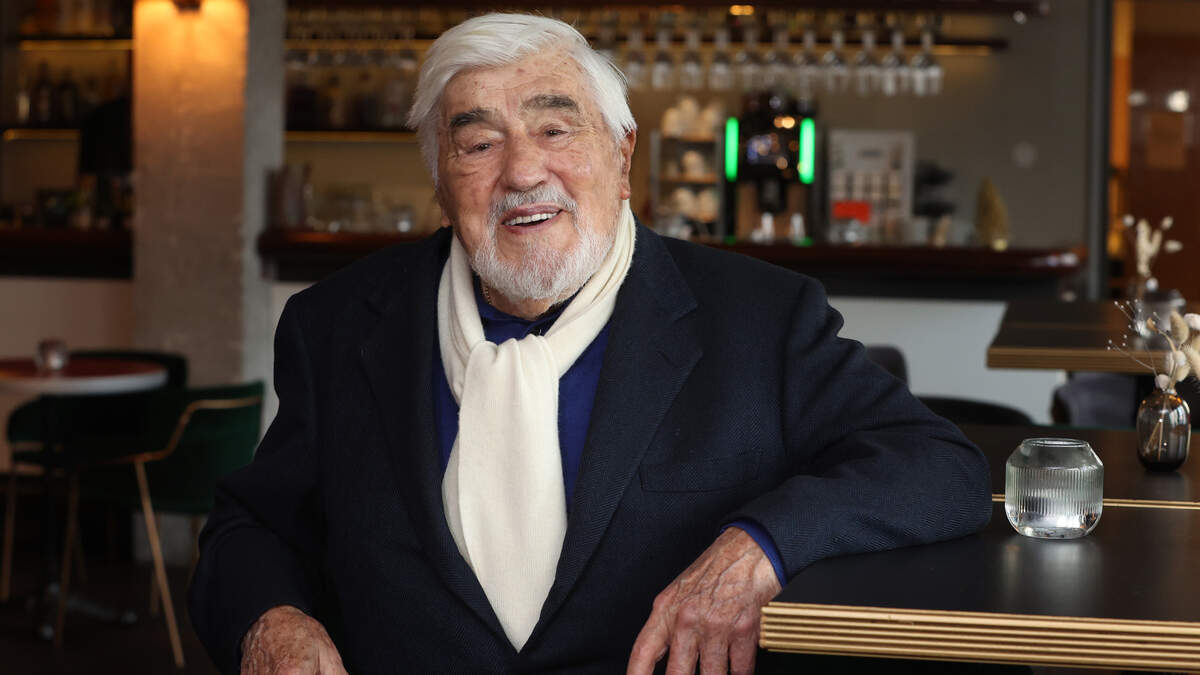
The Definitive Answer: Wann Wurde Mario Adorf Geboren?
For those seeking to uncover the exact date of birth for the legendary German actor Mario Adorf, the answer is precise and marks the beginning of an extraordinary life that would profoundly impact European cinema.
Wann wurde Mario Adorf geboren? Mario Adorf entered the world on
Monday, September 8, 1930. This date not only pinpoints the genesis of a celebrated career but also places his birth in a pivotal era, just before the tumultuous events that would shape 20th-century Germany and Europe. Born under the zodiac sign of Virgo (August 24 - September 23), Adorf exhibits many characteristics often attributed to this sign: meticulousness, a strong work ethic, and a keen analytical mind, all traits that have undoubtedly contributed to his remarkable versatility and longevity as an actor. His birth in 1930, a period of economic instability and rising political tensions in Germany, set the stage for a life that would witness profound societal changes, mirroring many of the complex narratives he would later portray on screen.
A Glimpse into Early Life and Formative Years
Mario Adorf's beginnings were anything but conventional, shaping the resilient and multifaceted individual he would become. He was born in Zurich, Switzerland, to an unmarried German mother, an X-ray assistant, and an Italian surgeon father whom he would not meet until much later in life. His early childhood was spent primarily with his mother in the picturesque Eifel region of Germany, a rural landscape that offered both solace and simplicity. However, circumstances led him to spend time in a Catholic children's home, an experience that, while challenging, likely instilled in him a certain fortitude and a deep understanding of human nature from a young age.
His intellectual curiosity became evident during his academic pursuits. Adorf initially delved into philosophy and literature, first at Mainz University and later continuing his studies in Zurich. This period of intellectual exploration provided him with a robust foundation, fostering a critical perspective and a rich understanding of human thought and emotion. It was in Zurich that his path veered towards the performing arts. Through initial forays as a director's assistant on the theater stage, he discovered an undeniable pull towards acting. This newfound passion led him to make a pivotal decision: he abandoned his academic studies to enroll in the prestigious Otto-Falckenberg-Schule in Munich, a renowned institution for dramatic arts. This rigorous training would hone his natural talent, preparing him for the demanding career that lay ahead. His dedication quickly bore fruit; upon graduation, he secured a coveted seven-year engagement as an ensemble member of the Münchner Kammerspiele, one of Germany's most esteemed theatres. It was during this period that his powerful stage presence began to translate to the silver screen, notably with his early film roles in the "08/15" trilogy and the iconic "Winnetou 1. Teil," marking the true commencement of his cinematic journey. To delve deeper into the specific impacts of these early experiences on his acting style, you might find valuable insights in
Wann Wurde Mario Adorf Geboren - Article 2.
A Titan of German and International Cinema: Mario Adorf's Illustrious Career
Mario Adorf's career is nothing short of legendary, spanning over six decades and encompassing more than 120 films. His sheer longevity and prolific output underscore his unparalleled dedication and remarkable talent. From his early roles, Adorf quickly established himself as an actor of formidable presence, capable of portraying a wide array of characters, from complex villains to charismatic heroes, often imbued with a raw intensity and a profound sense of realism. His distinctive voice and commanding physicality became his trademarks, allowing him to dominate scenes and leave an indelible impression on audiences.
His filmography reads like a historical overview of modern German cinema. Adorf starred in some of the most critically acclaimed and commercially successful films, both domestically and internationally. Key roles include his powerful performance in Volker Schlöndorff's "Die verlorene Ehre der Katharina Blum" (The Lost Honor of Katharina Blum), where he portrayed a complex and morally ambiguous police commissioner. Even more globally recognized was his role in Schlöndorff's adaptation of Günter Grass's "Die Blechtrommel" (The Tin Drum), an Oscar-winning masterpiece that brought German cinema to the forefront of international attention. Adorf's ability to embody characters that reflect the societal anxieties and historical burdens of Germany resonated deeply, making him a symbol of the country's cinematic renaissance.
Beyond these profound dramatic works, he also graced lighter fare and television productions, showcasing his incredible range. His later career saw him star in critically acclaimed TV series like "Der große Bellheim" and cinematic hits such as "Rossini," demonstrating his enduring appeal and adaptability to evolving media landscapes. His performances were consistently recognized with numerous prestigious awards, including the Adolf-Grimme-Preis, the Bambi, the Goldene Kamera, and multiple German Film Awards, solidifying his status as a national treasure. In 2010, his lifetime of contributions was further honored with an honorary doctorate, a testament to his profound cultural impact. For a closer look at the breadth and depth of his incredible filmography, further details are available in
Wann Wurde Mario Adorf Geboren - Article 3.
Beyond the Silver Screen: Author, Singer, and Cultural Icon
While Mario Adorf is primarily celebrated for his acting prowess, his artistic talents extend far beyond the confines of the film set. He is a truly multi-faceted artist who has enriched German culture in various ways, cementing his status as a beloved cultural icon. Adorf has proven himself to be a gifted author, penning several engaging books filled with amusing anecdotes and insightful reflections on his life and career. His storytelling ability, honed through years of character portrayal, translated seamlessly into the written word, captivating readers with his wit and wisdom.
Furthermore, Adorf has cultivated a parallel career as a singer, delighting audiences with his distinctive voice and theatrical charm. His live performances often incorporated chansons and stories from his vast repertoire, offering a more intimate connection with his fans. He also lent his resonant voice to various projects as a synchronsprecher (voice actor), further demonstrating his versatility and vocal range.
His engagement with the arts remained vibrant even into his later years. At the age of 88, he was still active, notably appearing in television productions such as "Winnetou - Der Mythos lebt" and "Karl Marx - der deutsche Prophet," proving that his passion for acting remained undimmed. In 2019, Adorf embarked on a poignant farewell tour titled "Zugabe" (Encore), where he bid adieu to the stage, reflecting on his incredible career through stories, songs, and recitations of his most memorable roles. This tour was a heartfelt celebration of his life's work, allowing his audience one last opportunity to experience his magnetic presence in person.
On a personal note, Mario Adorf has chosen to reside primarily in Italy since the 1960s, a country that reflects his paternal heritage and offers a Mediterranean lifestyle. He is in his second marriage, and from his first marriage to actress Lis Verhoeven, he has a daughter, Stella Adorf, who has also followed in her parents' footsteps to become an accomplished actress. This continuation of artistic legacy through his daughter further underscores his lasting impact on the German entertainment landscape.
Mario Adorf's Enduring Legacy and Impact
Mario Adorf’s impact on German and European cinema is profound and enduring. His career, launched from the simple question,
wann wurde Mario Adorf geboren, blossomed into a testament to dedication, talent, and an unwavering commitment to his craft. He navigated the complex landscape of post-war German identity, portraying characters who often grappled with moral ambiguities, historical burdens, and the human condition in its rawest forms. Through his performances, he not only entertained but also provoked thought, challenged perceptions, and held a mirror up to society.
His versatility allowed him to move effortlessly between genres and mediums, preventing him from being typecast and ensuring a fresh appeal throughout his decades-long career. Whether he was embodying a ruthless gangster, a conflicted intellectual, or a charming bon vivant, Adorf brought an authentic gravitas and an undeniable charisma to every role. His distinctive voice, powerful screen presence, and nuanced portrayals have left an indelible mark on generations of filmmakers and actors. He is not merely an actor; he is a cultural institution, a storyteller whose life and work are interwoven with the fabric of modern German history. His legacy is one of artistic integrity, relentless creativity, and an ability to connect with audiences on a deeply human level, ensuring that his contributions will be celebrated for many years to come.
In summary, Mario Adorf, born on September 8, 1930, has carved out a monumental career defined by exceptional talent, versatility, and an unwavering passion for the performing arts. His journey from humble beginnings to international stardom, marked by iconic roles, numerous accolades, and a diverse range of artistic endeavors, solidifies his place as one of the most significant and beloved figures in German cultural history. His influence continues to resonate, inspiring new generations and reminding us of the transformative power of a truly dedicated artist.